This course invites students to understand coffee as a living system shaped by the intersecting forces of capitalism, ecology, culture, and human experience. By approaching coffee through conversations, reflection, and hands-on experiences, learners uncover how individual habits, ecological realities, social practices, and economic structures converge—and how these interactions generate feedback loops that create a dynamic system. Through this layered exploration, students develop foundational systems-thinking skills: a holistic way of understanding how the parts of a complex whole interact, reinforce, or transform one another.
Systems thinking trains students to trace webs of relationships, follow flows and processes, and identify patterns that shape outcomes over time. Students not only study coffee as a system but cultivate the awareness, agency, and imagination necessary for meaningful systems change — the process of transforming the structures, relationships, and mental models that shape how a system functions. Systems change works to shift the patterns, rules, power dynamics, and assumptions that produce those problems in the first place.
Coffee as a System

Our pedagogical approach is nourished by four interconnected roots

Hospitality
Creating a shared space of welcome, curiosity, and sensory engagement through the serving of coffee.

Reflection
Using the daily ritual of coffee as a gateway to explore history, and the interconnections between people and places.

Collaboration
Learning with and from practitioners (including farmers, roasters, NGOs, and researchers) and peers.
Design
Applying systems design principles to generate prototypes, and projects that explore what sustainable coffee futures might look like.
View Course Curriculum

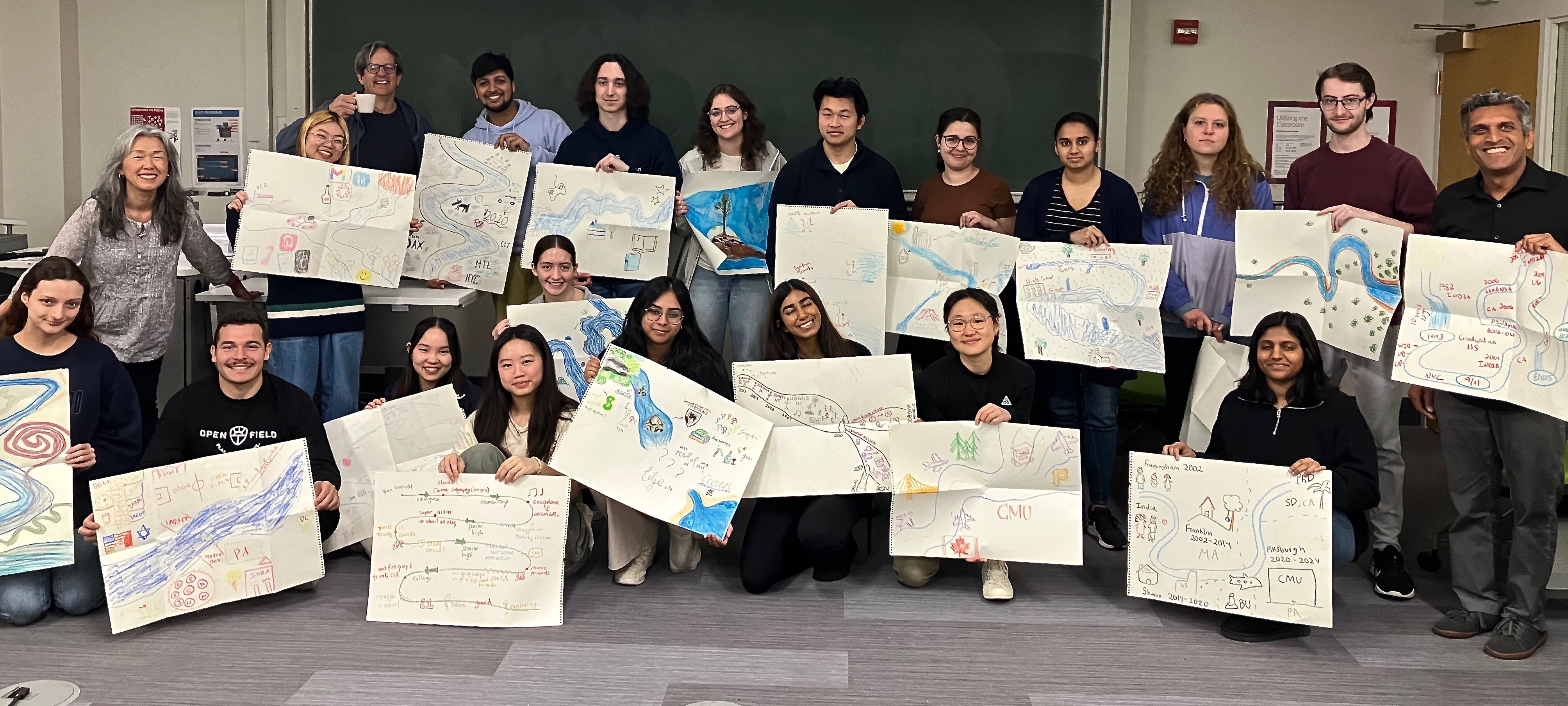
Hospitality
We begin each class with the deliberate act of serving a cup of coffee. This gesture sets the stage for shared inquiry by opening the senses and inviting conversation. This practice transforms tasting into a form of inquiry—an embodied way of connecting concepts to place, people, and lived experience. We choose coffees that align with the day’s themes and learning objectives. From this starting point, we trace the journey of coffee — from the landscapes of its origin to the hands that harvest, roast, serve, and consume it — exploring the histories, cultures, and sustainability challenges embedded in each cup. An arabica coffee from Ethiopia might spark a discussion on origin myths; a coffee from Rwanda leads students to consider women-led collective action in a post-conflict society; a coffee from the Sierra de Nevada de Santa Marta, Colombia, introduces students to how capitalism mingles with an Indigenous worldview.
Reflection
Reflective practices are critical to the course, positioning coffee not as a mere beverage or commodity but as history, ritual, and relationship. Coffee becomes a mirror: Students examine their personal choices to uncover how decisions around what, why, and how they consume coffee are connected to human rights, the health of ecosystems, and global history. This reflective process, consisting of journal writing and group discussions, helps students recognize that they are part of the coffee system—not outside observers. Their habits and values become data points for inquiry, revealing interdependencies and impacts that are often invisible in everyday consumption.
Collaboration
Students learn directly from practitioners whose daily work—on farms, in cooperatives, in roasteries, in cafés—embodies the complexities and possibilities of the coffee world. We regularly welcome guests, in-person and virtual: this includes roasters from Pittsburgh’s vibrant coffee community, as well as farmers and representatives of cooperatives from producing countries, directors of NGOs, and researchers. These conversations serve to humanize “supply chains,” adding depth and nuance to student understanding of systems as a dynamic, relational practice. We use case studies of specific coffee-growing places in Colombia, Haiti, and Rwanda to contextualize the stories of our guests and encourage students to appreciate complexity within the global coffee system.
Student Design
Students translate their learning into coffee-centered projects that promote greater equity and ecological sustainability through the integration of research, reflection, and collaboration. Projects have included a website exploring the meanings of coffee; a podcast on the history and future of coffee in Haiti; research papers comparing certification systems; animated shorts on coffee rituals; card games; a prototype of a rainwater collection device; a survey of student coffee preferences; and an anthology of poetry dedicated to coffee! These projects are showcased at the Spirit of Coffee festival, a public event in which faculty, students, roasters, baristas, nonprofit partners, and CMU community members come together to engage with the projects, taste coffee, and discuss coffee systems. The festival is a space where relationships form, ideas circulate, and students imagine universities as catalysts for systems change.
View Student Work
Coffee, Capitalism, and Consciousness
Co-taught by Saurin Nanavati and John Soluri, this course explores coffee as a shared ritual and a global system, connecting academic inquiry with the lived experiences of those who grow, trade, roast, and serve it.
Home
Courses
Local Communities
Research Communities
Global Communities
Resources
This course invites students to understand coffee as a living system shaped by the intersecting forces of capitalism, ecology, culture, and human experience. By approaching coffee through conversations, reflection, and hands-on experiences, learners uncover how individual habits, ecological realities, social practices, and economic structures converge—and how these interactions generate feedback loops that create a dynamic system. Through this layered exploration, students develop foundational systems-thinking skills: a holistic way of understanding how the parts of a complex whole interact, reinforce, or transform one another.
Systems thinking trains students to trace webs of relationships, follow flows and processes, and identify patterns that shape outcomes over time. Students not only study coffee as a system but cultivate the awareness, agency, and imagination necessary for meaningful systems change — the process of transforming the structures, relationships, and mental models that shape how a system functions. Systems change works to shift the patterns, rules, power dynamics, and assumptions that produce those problems in the first place.
Coffee as a System
Our pedagogical approach is nourished by four interconnected roots
Hospitality
Creating a shared space of welcome, curiosity, and sensory engagement through the serving of coffee.
Reflection
Using the daily ritual of coffee as a gateway to explore history, and the interconnections between people and places.
Collaboration
Learning with and from practitioners (including farmers, roasters, NGOs, and researchers) and peers.
Design
Applying systems design principles to generate prototypes, and projects that explore what sustainable coffee futures might look like.
View Course Curriculum
Coffee, Capitalism, and Consciousness
Co-taught by Saurin Nanavati and John Soluri, this course explores coffee as a shared ritual and a global system, connecting academic inquiry with the lived experiences of those who grow, trade, roast, and serve it.
Hospitality
We begin each class with the deliberate act of serving a cup of coffee. This gesture sets the stage for shared inquiry by opening the senses and inviting conversation. This practice transforms tasting into a form of inquiry—an embodied way of connecting concepts to place, people, and lived experience. We choose coffees that align with the day’s themes and learning objectives. From this starting point, we trace the journey of coffee — from the landscapes of its origin to the hands that harvest, roast, serve, and consume it — exploring the histories, cultures, and sustainability challenges embedded in each cup. An arabica coffee from Ethiopia might spark a discussion on origin myths; a coffee from Rwanda leads students to consider women-led collective action in a post-conflict society; a coffee from the Sierra de Nevada de Santa Marta, Colombia, introduces students to how capitalism mingles with an Indigenous worldview.
Reflection
Reflective practices are critical to the course, positioning coffee not as a mere beverage or commodity but as history, ritual, and relationship. Coffee becomes a mirror: Students examine their personal choices to uncover how decisions around what, why, and how they consume coffee are connected to human rights, the health of ecosystems, and global history. This reflective process, consisting of journal writing and group discussions, helps students recognize that they are part of the coffee system—not outside observers. Their habits and values become data points for inquiry, revealing interdependencies and impacts that are often invisible in everyday consumption.
Collaboration
Students learn directly from practitioners whose daily work—on farms, in cooperatives, in roasteries, in cafés—embodies the complexities and possibilities of the coffee world. We regularly welcome guests, in-person and virtual: this includes roasters from Pittsburgh’s vibrant coffee community, as well as farmers and representatives of cooperatives from producing countries, directors of NGOs, and researchers. These conversations serve to humanize “supply chains,” adding depth and nuance to student understanding of systems as a dynamic, relational practice. We use case studies of specific coffee-growing places in Colombia, Haiti, and Rwanda to contextualize the stories of our guests and encourage students to appreciate complexity within the global coffee system.
Student Design
Students translate their learning into coffee-centered projects that promote greater equity and ecological sustainability through the integration of research, reflection, and collaboration. Projects have included a website exploring the meanings of coffee; a podcast on the history and future of coffee in Haiti; research papers comparing certification systems; animated shorts on coffee rituals; card games; a prototype of a rainwater collection device; a survey of student coffee preferences; and an anthology of poetry dedicated to coffee! These projects are showcased at the Spirit of Coffee festival, a public event in which faculty, students, roasters, baristas, nonprofit partners, and CMU community members come together to engage with the projects, taste coffee, and discuss coffee systems. The festival is a space where relationships form, ideas circulate, and students imagine universities as catalysts for systems change.
This course invites students to understand coffee as a living system shaped by the intersecting forces of capitalism, ecology, culture, and human experience. By approaching coffee through conversations, reflection, and hands-on experiences, learners uncover how individual habits, ecological realities, social practices, and economic structures converge—and how these interactions generate feedback loops that create a dynamic system. Through this layered exploration, students develop foundational systems-thinking skills: a holistic way of understanding how the parts of a complex whole interact, reinforce, or transform one another.
Systems thinking trains students to trace webs of relationships, follow flows and processes, and identify patterns that shape outcomes over time. Students not only study coffee as a system but cultivate the awareness, agency, and imagination necessary for meaningful systems change — the process of transforming the structures, relationships, and mental models that shape how a system functions. Systems change works to shift the patterns, rules, power dynamics, and assumptions that produce those problems in the first place.
Coffee as a System
Our pedagogical approach is nourished by four interconnected roots

Hospitality
Creating a shared space of welcome, curiosity, and sensory engagement through the serving of coffee.
Reflection
Using the daily ritual of coffee as a gateway to explore history, and the interconnections between people and places.
Collaboration
Learning with and from practitioners (including farmers, roasters, NGOs, and researchers) and peers.
Design
Applying systems design principles to generate prototypes, and projects that explore what sustainable coffee futures might look like.
View Course Curriculum
Hospitality
We begin each class with the deliberate act of serving a cup of coffee. This gesture sets the stage for shared inquiry by opening the senses and inviting conversation. This practice transforms tasting into a form of inquiry—an embodied way of connecting concepts to place, people, and lived experience. We choose coffees that align with the day’s themes and learning objectives. From this starting point, we trace the journey of coffee — from the landscapes of its origin to the hands that harvest, roast, serve, and consume it — exploring the histories, cultures, and sustainability challenges embedded in each cup. An arabica coffee from Ethiopia might spark a discussion on origin myths; a coffee from Rwanda leads students to consider women-led collective action in a post-conflict society; a coffee from the Sierra de Nevada de Santa Marta, Colombia, introduces students to how capitalism mingles with an Indigenous worldview.
Reflection
Reflective practices are critical to the course, positioning coffee not as a mere beverage or commodity but as history, ritual, and relationship. Coffee becomes a mirror: Students examine their personal choices to uncover how decisions around what, why, and how they consume coffee are connected to human rights, the health of ecosystems, and global history. This reflective process, consisting of journal writing and group discussions, helps students recognize that they are part of the coffee system—not outside observers. Their habits and values become data points for inquiry, revealing interdependencies and impacts that are often invisible in everyday consumption.
Collaboration
Students learn directly from practitioners whose daily work—on farms, in cooperatives, in roasteries, in cafés—embodies the complexities and possibilities of the coffee world. We regularly welcome guests, in-person and virtual: this includes roasters from Pittsburgh’s vibrant coffee community, as well as farmers and representatives of cooperatives from producing countries, directors of NGOs, and researchers. These conversations serve to humanize “supply chains,” adding depth and nuance to student understanding of systems as a dynamic, relational practice. We use case studies of specific coffee-growing places in Colombia, Haiti, and Rwanda to contextualize the stories of our guests and encourage students to appreciate complexity within the global coffee system.
Student Design
Students translate their learning into coffee-centered projects that promote greater equity and ecological sustainability through the integration of research, reflection, and collaboration. Projects have included a website exploring the meanings of coffee; a podcast on the history and future of coffee in Haiti; research papers comparing certification systems; animated shorts on coffee rituals; card games; a prototype of a rainwater collection device; a survey of student coffee preferences; and an anthology of poetry dedicated to coffee! These projects are showcased at the Spirit of Coffee festival, a public event in which faculty, students, roasters, baristas, nonprofit partners, and CMU community members come together to engage with the projects, taste coffee, and discuss coffee systems. The festival is a space where relationships form, ideas circulate, and students imagine universities as catalysts for systems change.
View Student Work
Coffee, Capitalism, and Consciousness
Co-taught by Saurin Nanavati and John Soluri, this course explores coffee as a shared ritual and a global system, connecting academic inquiry with the lived experiences of those who grow, trade, roast, and serve it.
This course invites students to understand coffee as a living system shaped by the intersecting forces of capitalism, ecology, culture, and human experience. By approaching coffee through conversations, reflection, and hands-on experiences, learners uncover how individual habits, ecological realities, social practices, and economic structures converge—and how these interactions generate feedback loops that create a dynamic system. Through this layered exploration, students develop foundational systems-thinking skills: a holistic way of understanding how the parts of a complex whole interact, reinforce, or transform one another.
Systems thinking trains students to trace webs of relationships, follow flows and processes, and identify patterns that shape outcomes over time. Students not only study coffee as a system but cultivate the awareness, agency, and imagination necessary for meaningful systems change — the process of transforming the structures, relationships, and mental models that shape how a system functions. Systems change works to shift the patterns, rules, power dynamics, and assumptions that produce those problems in the first place.
Coffee as a System
Our pedagogical approach is nourished by four interconnected roots
Hospitality
Creating a shared space of welcome, curiosity, and sensory engagement through the serving of coffee.
Reflection
Using the daily ritual of coffee as a gateway to explore history, and the interconnections between people and places.
Collaboration
Learning with and from practitioners (including farmers, roasters, NGOs, and researchers) and peers.
Design
Applying systems design principles to generate prototypes, and projects that explore what sustainable coffee futures might look like.
View Course Curriculum
Hospitality
We begin each class with the deliberate act of serving a cup of coffee. This gesture sets the stage for shared inquiry by opening the senses and inviting conversation. This practice transforms tasting into a form of inquiry—an embodied way of connecting concepts to place, people, and lived experience. We choose coffees that align with the day’s themes and learning objectives. From this starting point, we trace the journey of coffee — from the landscapes of its origin to the hands that harvest, roast, serve, and consume it — exploring the histories, cultures, and sustainability challenges embedded in each cup. An arabica coffee from Ethiopia might spark a discussion on origin myths; a coffee from Rwanda leads students to consider women-led collective action in a post-conflict society; a coffee from the Sierra de Nevada de Santa Marta, Colombia, introduces students to how capitalism mingles with an Indigenous worldview.
Reflection
Reflective practices are critical to the course, positioning coffee not as a mere beverage or commodity but as history, ritual, and relationship. Coffee becomes a mirror: Students examine their personal choices to uncover how decisions around what, why, and how they consume coffee are connected to human rights, the health of ecosystems, and global history. This reflective process, consisting of journal writing and group discussions, helps students recognize that they are part of the coffee system—not outside observers. Their habits and values become data points for inquiry, revealing interdependencies and impacts that are often invisible in everyday consumption.
Collaboration
Students learn directly from practitioners whose daily work—on farms, in cooperatives, in roasteries, in cafés—embodies the complexities and possibilities of the coffee world. We regularly welcome guests, in-person and virtual: this includes roasters from Pittsburgh’s vibrant coffee community, as well as farmers and representatives of cooperatives from producing countries, directors of NGOs, and researchers. These conversations serve to humanize “supply chains,” adding depth and nuance to student understanding of systems as a dynamic, relational practice. We use case studies of specific coffee-growing places in Colombia, Haiti, and Rwanda to contextualize the stories of our guests and encourage students to appreciate complexity within the global coffee system.
Student Design
Students translate their learning into coffee-centered projects that promote greater equity and ecological sustainability through the integration of research, reflection, and collaboration. Projects have included a website exploring the meanings of coffee; a podcast on the history and future of coffee in Haiti; research papers comparing certification systems; animated shorts on coffee rituals; card games; a prototype of a rainwater collection device; a survey of student coffee preferences; and an anthology of poetry dedicated to coffee! These projects are showcased at the Spirit of Coffee festival, a public event in which faculty, students, roasters, baristas, nonprofit partners, and CMU community members come together to engage with the projects, taste coffee, and discuss coffee systems. The festival is a space where relationships form, ideas circulate, and students imagine universities as catalysts for systems change.
View Student Work
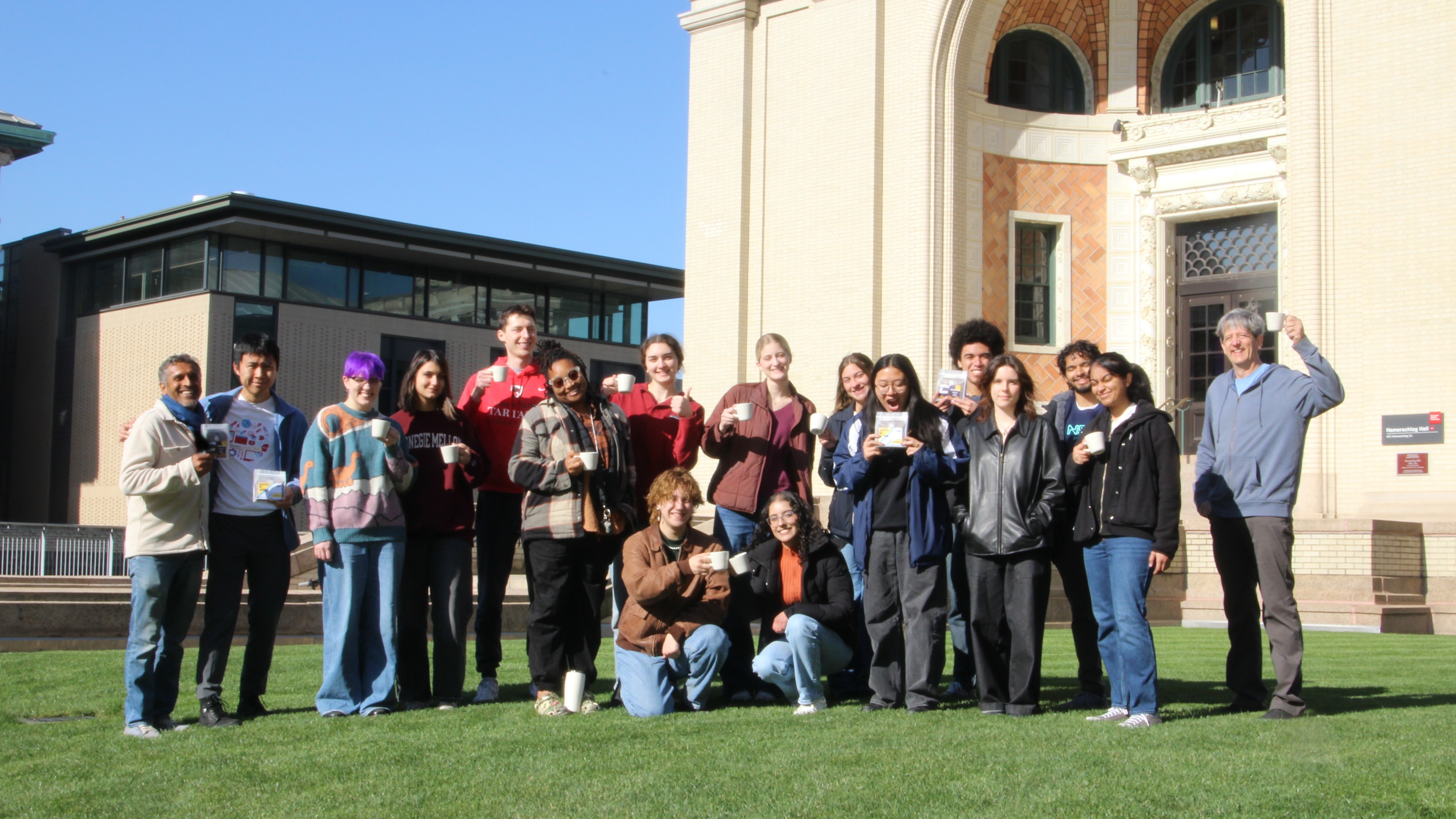
Coffee, Capitalism, and Consciousness
Co-taught by Saurin Nanavati and John Soluri, this course explores coffee as a shared ritual and a global system, connecting academic inquiry with the lived experiences of those who grow, trade, roast, and serve it.